In their words
Penélope Cruz gets candid about perimenopause — and talks it through with Olivia Wilde.
In a new Allure interview, Penélope Cruz gets candid about perimenopause — and talks it through with Olivia Wilde, her director and co-star on The Invite. Two women saying it out loud, like it's no big deal. And along the way she reels off symptoms almost no one connects to hormones — frozen shoulder among them.
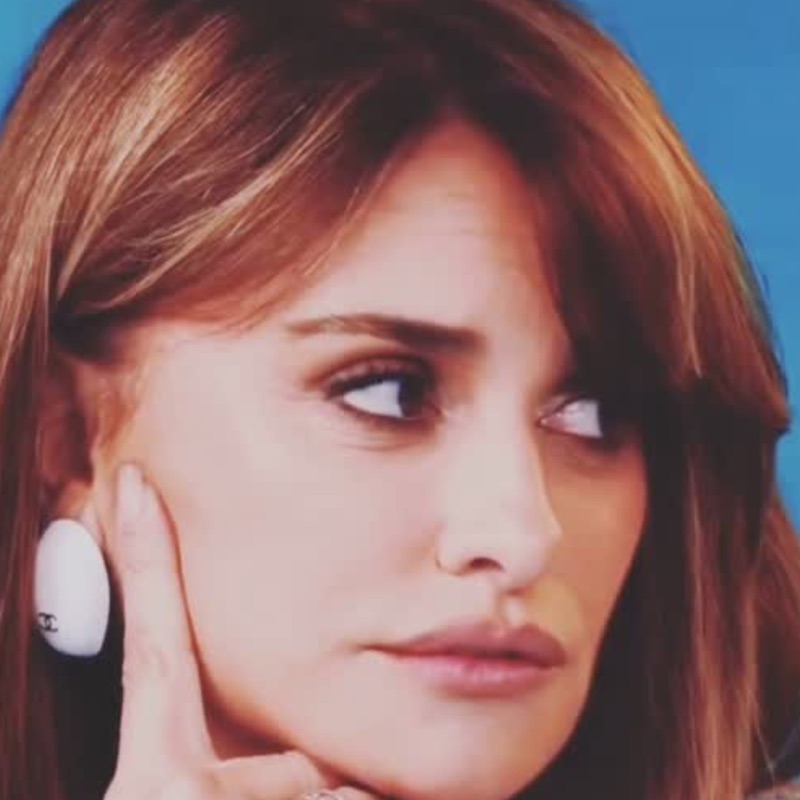
Penélope Cruz on perimenopause — Allure interview
Opens on Instagram, in a new tab.
Two women saying it out loud
What makes the moment land isn't just what she says — it's how. Cruz and Wilde, fresh off shooting The Invite (which Wilde directed), talk perimenopause as casually as they'd talk about the shoot. No euphemisms, no dropping to a whisper. Penélope recalls the warning her doctor gave her back at forty-one:
"Your hormones are going to be doing this crazy dance for the next ten or twelve years." — Penélope Cruz, recalling what her doctor told her (Allure)
Then she lays the whole thing out: ten years of near-monthly cysts, oestrogen that — in her words — can lurch from 30 to 500, and one symptom that fit nowhere, the frozen shoulder. Wilde, next to her, admits she'd never heard of the link. And that's the whole problem — one woman filling another one in on something nobody told either of them. It almost never happens.
What does a shoulder have to do with perimenopause?
A frozen shoulder — adhesive capsulitis, if you want the medical name — is exactly what it sounds like: the joint stiffens up and aches, and getting the movement back can take months. What's striking is who it hits. It's far more common in women between 40 and 60 — the same window when oestrogen starts dropping off unpredictably.
And this isn't just a hunch; it's what the data shows. Frozen shoulder affects about 2–5% of people, but roughly three in four cases are women, most of them between 40 and 60 — right in the perimenopause window. Research keeps pointing to oestrogen: it helps keep inflammation down and the connective tissue around the joint supple, so when levels fall, that tissue feels it. In a study of nearly 2,000 women aged 45 to 60, those not on hormone therapy had almost twice the rate of frozen shoulder (7.65% vs 3.95%). The signal leans that way, even if it'll take more research to pin down.
The catch is that almost nobody joins the dots for you: you go in about a shoulder, you come out with an explanation about a shoulder — and the hormones never come up.
And the shoulder isn't the only joint that feels it. If your hands, knees or back ache too, here's why joints ache in perimenopause and when to see a doctor.
This is exactly what Maia is for. A stiff shoulder, the brain fog, waking at 4 a.m., a mood that's hit the floor — on their own they look like unrelated glitches. Maia connects the dots so you can see the whole picture and finally understand what's going on.
Join the waitlistThe other symptoms nobody warns you about
Frozen shoulder is just one of the symptoms that rarely get pinned on hormones at first:
- Brain fog — losing your train of thought, blanking on words.
- Waking in the small hours, night after night, for no reason, and exhaustion that sleep doesn't fix.
- Mood swings that come out of nowhere.
- Palpitations, vaginal dryness, achy joints, ringing in your ears.
When someone like Penélope Cruz says it out loud, the silence cracks a little. But you shouldn't need an actress prepping for a role to find out what's going on in your own body.
Frequently asked questions
Is frozen shoulder a symptom of perimenopause?
Frozen shoulder (adhesive capsulitis) affects around 2–5% of people, but roughly three in four cases are women — most between 40 and 60, the perimenopause window. Research links it to falling oestrogen, which helps keep inflammation down and the joint's connective tissue healthy. It doesn't happen to everyone, and more research is needed, but the association with this stage is well documented.
At what age does perimenopause start?
Perimenopause usually starts in your mid-40s, though it can begin earlier, from 40. It's the run-up to menopause, when hormones swing unpredictably, and it can last several years before your last period.
What other symptoms does perimenopause have?
Beyond frozen shoulder, many women get brain fog, insomnia or 4 a.m. wake-ups, mood swings, palpitations, vaginal dryness, achy joints or ringing in the ears. A lot of them don't obviously scream "hormones", which is exactly why they're so hard to connect.
Maia isn't a medical service and doesn't replace your healthcare professional. If you have shoulder pain or any other symptom, talk to your doctor.
Sources: Penélope Cruz and Olivia Wilde's interview with Allure (coverage in Woman&Home, Fierce by mitú and Tyla). On the link between oestrogen and frozen shoulder: study by Dr Jocelyn Wittstein presented at the North American Menopause Society (Duke, 2022) and a clinical review at Brown University Health.